Lifestyle Tech in 2026: Why Wearables Are Turning Into Full-Time Health Platforms
- Feb 16
- 6 min read
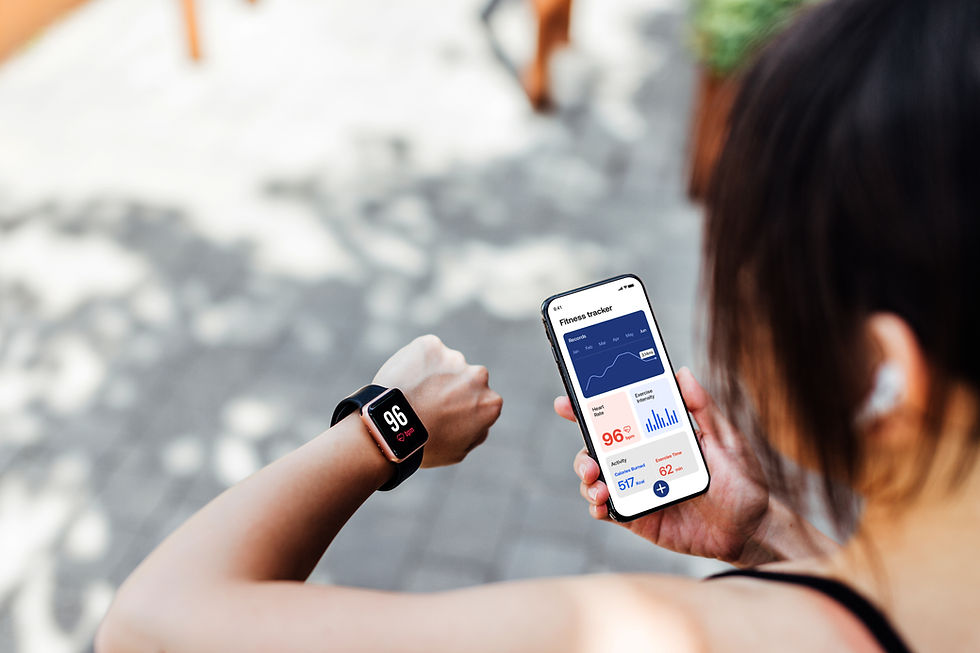
At 6:40 AM in Pune, a young professional wakes up before her alarm. Not because she planned to. Because her smartwatch vibrates gently and tells her something is off. Her resting heart rate is unusually high, her sleep recovery score is low, and her stress trend has been climbing for three days. The watch doesn’t panic her. It doesn’t diagnose her. But it does what modern healthcare rarely does in India—it gives her a warning before her body forces her to stop.
This is the new role wearables are beginning to play in 2026. They are no longer accessories for fitness enthusiasts. They are becoming full-time health platforms, operating quietly in the background of everyday life. And in a country like India—where preventive healthcare is still underdeveloped and chronic disease is rising rapidly—this shift may become one of the most important transformations in modern health behavior.
For years, wearables were marketed as lifestyle gadgets. Step counts. Calories. Workout tracking. Occasionally, a heart rate monitor. They were treated as motivation tools, not medical tools. But something has changed. The wearable is evolving from a tracker into a system. From a device into a platform. From a product into a continuous service.
The reason is simple: the market has moved beyond fitness. Consumers are no longer buying wearables just to look sporty.
They are buying them to feel safe.
India in 2026 is a country where stress is a public health issue, where metabolic disorders are rising across age groups, and where the boundaries between work, family, and personal life have blurred into constant mental load. In this environment, the idea of “checking health once a year” feels outdated. People want health feedback in real time. Not because they are obsessed, but because they are overwhelmed. And when you are overwhelmed, the most valuable thing is early clarity.
This is where wearables fit perfectly. They sit on the body. They collect signals. They create patterns. And they are turning health into something you can monitor daily, not fear occasionally.
The biggest shift in 2026 is not the wearable itself. It is what the wearable represents. It represents a change in who owns healthcare. In India, healthcare has historically been doctor-led and hospital-led. You went to the hospital when something went wrong. You depended on a doctor to tell you what you needed. You reacted.
Wearables introduce a new model: consumer-led preventive health. A person begins to understand their body through continuous data. They learn what affects their sleep. They notice patterns in stress. They see how late-night meals impact recovery. They recognize how alcohol affects heart rate variability. They observe how travel disrupts resting heart rate. Slowly, health stops being a mystery. It becomes a dashboard.
This is why wearables are turning into platforms. Because a platform is not just a tool. It is an ecosystem of insight, habit, and action.
And the action layer is where wearables are evolving fastest.
In 2026, wearables are not just measuring steps and heart rate. They are increasingly tracking sleep quality, breathing rate, stress indicators, recovery, menstrual cycles, and in some advanced models, ECG-like heart readings. They are integrating with smartphone health apps, nutrition apps, and even teleconsultation services. Some are moving toward continuous glucose monitoring integrations. Others are linking with preventive diagnostic subscriptions. The wearable is becoming the “front door” of a new health economy.
The implications for India are huge.
India is one of the world’s largest markets for diabetes, hypertension, and cardiovascular risk. Many cases are discovered late. Many people do not have regular access to preventive testing. Many avoid hospitals until symptoms become severe. This creates a healthcare system that is heavily treatment-driven and financially draining.
Wearables offer a different possibility. They can detect early patterns. They can nudge behavior before a disease becomes irreversible. They can help people build a relationship with their health before they build a relationship with a hospital.
This is why, in 2026, wearable adoption in India is being driven not only by fitness culture but by health anxiety and health awareness. People are not just trying to get abs. They are trying to avoid collapse.
Another reason wearables are becoming full-time platforms is the rise of health subscriptions.
In India’s urban markets, consumers are increasingly paying monthly for wellness ecosystems. This includes preventive tests, nutrition consultations, mental wellness support, and fitness coaching. Wearables fit naturally into this because they provide the continuous layer. They provide the daily feedback that keeps the subscription alive.
Without wearables, a health subscription is passive. With wearables, it becomes interactive. It becomes personal. It becomes sticky.
This is why companies are building “wearable + service” models. The wearable becomes the hardware entry point. The subscription becomes the long-term revenue. And the data becomes the intelligence layer.
But the wearable’s most important transformation is happening at a deeper level: it is changing the psychology of health.
In India, health has traditionally been treated as something external. Something you visit. Something you pay for when necessary. Something you ignore until it becomes unavoidable.
Wearables are making health internal and continuous. They turn health into a daily conversation.
This is powerful, but it is also dangerous if not handled responsibly.
Because continuous monitoring can create anxiety. It can create obsessive behavior. It can create false alarms. It can make people interpret data without context. A slightly high heart rate becomes panic. A low recovery score becomes fear. A poor sleep night becomes obsession.
This is why the future of wearables is not just better sensors. It is better interpretation.
The platform layer must evolve into responsible intelligence. Not just numbers. Not just charts. But context, education, and human support. This is where AI is playing a central role.
In 2026, AI is becoming the translator between data and meaning. Wearables generate massive amounts of data. AI helps interpret patterns, identify anomalies, and deliver actionable insights. It can differentiate between a normal variation and a real risk. It can detect trends across weeks, not just moments. It can reduce noise and increase clarity.
This is where wearables become truly valuable. Not when they track. But when they guide.
In India, this guidance layer matters more than in many Western markets because healthcare access is uneven. Many people do not have a primary care doctor. Many do not have routine checkups. Wearables can fill a gap, not by replacing doctors, but by providing early signals that push people toward medical attention when needed.
Wearables are also changing corporate wellness.
In India’s competitive corporate culture, burnout is widespread. Employers are increasingly investing in wellness programs not as a benefit but as a productivity strategy. Wearables are becoming part of this because they offer measurable data. Sleep scores, stress trends, activity levels, and recovery patterns become visible. This allows organizations to design wellness interventions that are not generic but personalized.
Of course, this also raises ethical questions. Health data is sensitive. Corporate wellness must never become surveillance. India’s data privacy frameworks will need to mature quickly to protect consumers.
And then there is the next frontier: clinical integration.
Wearables in 2026 are still not full medical devices for most users. But they are moving closer. Some models can detect irregular heart rhythms. Some can capture ECG-like readings. Some can flag sleep apnea risk. Some can integrate with glucose sensors. Over time, wearables may become the first layer of population-level screening.
This is where India’s opportunity becomes global.
If India can build wearable platforms that are affordable, reliable, and culturally adapted, it can become a leader in consumer health technology. India has the scale. It has the engineering talent. It has the need. And it has a population that is increasingly comfortable with digital systems.
The wearable platform economy will not just be about gadgets. It will be about health behavior.
And in 2026, the biggest shift is that health is becoming something people manage continuously, not occasionally.
Wearables are turning into full-time health platforms because they sit at the intersection of three realities: rising chronic disease, rising consumer awareness, and rising digital convenience. They offer something the Indian healthcare system has historically struggled to deliver: early visibility.
In the years ahead, the winners in lifestyle tech will not be the brands with the most features. They will be the brands that build trust, deliver meaningful insights, protect privacy, and connect wearables to real health outcomes.
Because the future of healthcare is not only in hospitals.
It is on wrists.
And it is always on.


Comments